
Categories
Buying, SellingPublished May 23, 2026
Homes With First Floor Primary: What to Know

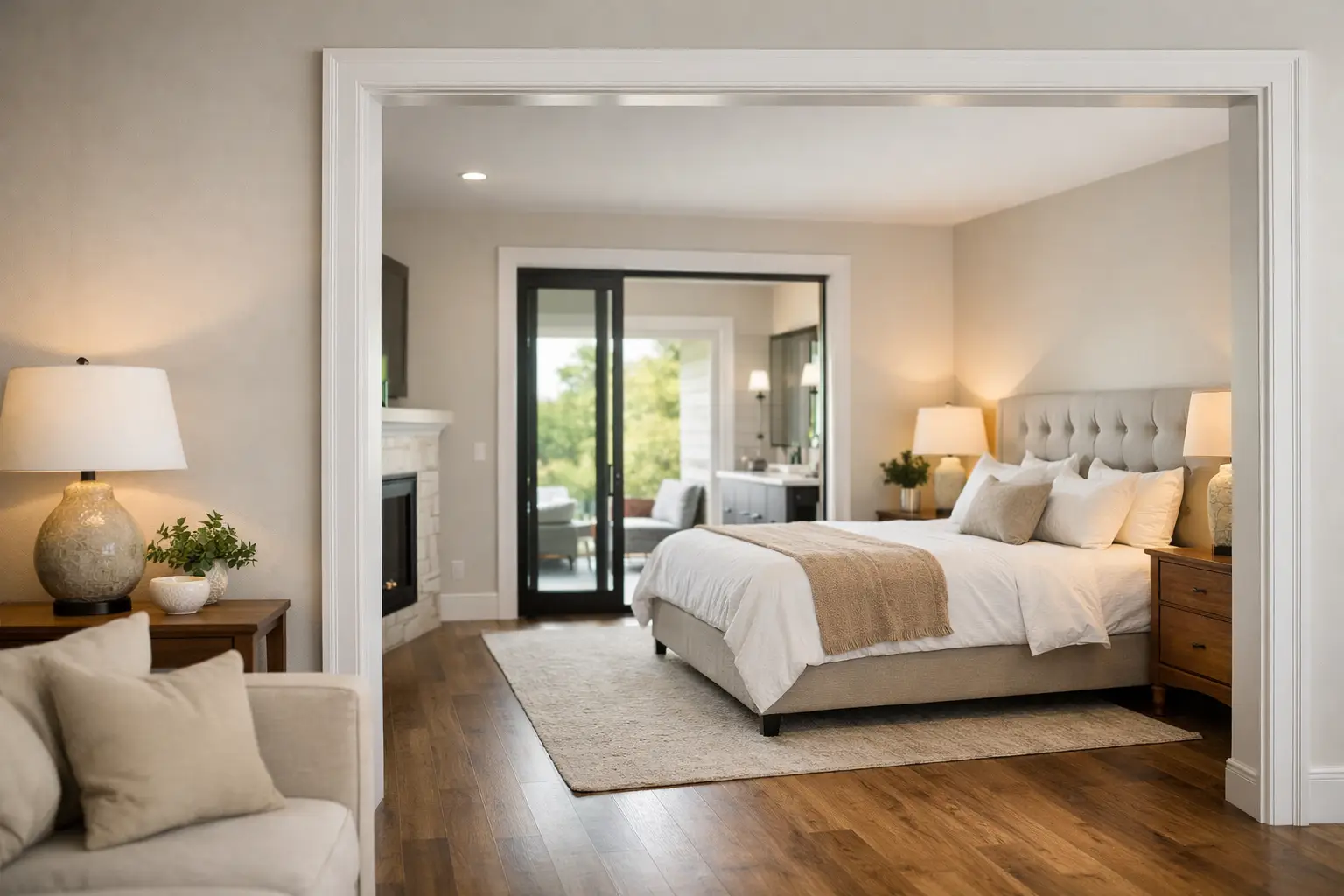
If carrying laundry up the stairs already feels old, or you're planning ahead for how you want to live five or ten years from now, homes with first floor primary layouts deserve a close look. For many buyers across Hampton Roads and the Virginia Peninsula, this feature is not just a nice extra. It can change how comfortable, flexible, and practical a home feels every single day.
A first-floor primary bedroom places the main sleeping space on the ground level, usually with an attached bath and walk-in closet. That sounds simple, but it has a big effect on how a home works for busy families, military households, empty nesters, and anyone who wants a little more breathing room in their daily routine.
Why homes with first floor primary appeal to so many buyers
The biggest reason is convenience. When the primary suite is downstairs, you avoid climbing stairs at the beginning and end of every day. That matters for buyers thinking about long-term comfort, but it also matters right now for people with young children, demanding work schedules, injuries, or just a preference for easier living.
Privacy is another major draw. In many two-story homes, secondary bedrooms are upstairs while the primary suite sits apart on the first floor. That separation can be a real advantage for households with kids, guests, or multi-generational living needs. Parents often like having a quiet retreat, and guests often appreciate not feeling like they are right on top of the main bedroom.
There is also resale appeal. Not every buyer is specifically searching for this layout, but many are open to it once they see the value. In markets like Yorktown, Williamsburg, Newport News, Chesapeake, and Virginia Beach, a first-floor primary can broaden interest because it works for different life stages.
What buyers usually love about this layout
A good floor plan can make a home feel easier to live in from day one. Homes with first floor primary suites often support that in a few key ways.
The first is aging in place potential. Even if retirement is far off, many buyers want a home that will still fit later in life. Choosing a layout with the primary bedroom on the main level can reduce the chance of needing a move purely because stairs become a problem.
The second is daily function. If the kitchen, living space, laundry, and primary suite are all on one level, the home often feels more efficient. That can be especially attractive for buyers who want less wasted movement and a more manageable routine.
The third is flexibility upstairs. When the primary suite is downstairs, the upper level can be dedicated to children, guests, a home office, a media room, or hobby space. That separation can make the home feel more organized.
Of course, not every home with this feature is automatically a good fit. Layout matters as much as location. A well-designed first floor primary should feel private, connected to the rest of the house, and practical without sitting in the middle of the busiest traffic path.
The trade-offs to think through before you buy
This is where buyers benefit from honest guidance. A first-floor primary can be a great choice, but there are a few trade-offs worth weighing.
One issue is noise. In some homes, the primary bedroom may be close to the kitchen, family room, garage entry, or main living area. That can be fine for some households and frustrating for others. If one person wakes up early or keeps a different schedule, pay attention to sound transfer.
Security and privacy can also vary. A first-floor bedroom may sit closer to backyard access, patios, or common areas. For some buyers that is no concern at all. For others, especially those moving from a traditional upstairs-primary layout, it may take some adjustment.
Another factor is square footage distribution. In certain homes, placing the primary suite downstairs reduces the size of living spaces or creates a choppy floor plan. You want to make sure the convenience is not coming at the expense of a cramped kitchen, awkward great room, or limited storage.
There is also the question of future household needs. If you expect young children to need close supervision at night, an upstairs group of bedrooms may feel more comfortable for this season of life. Some families love the separation. Others realize they would rather have everyone on the same level for a few more years.
How to evaluate homes with first floor primary layouts
When you tour a home, avoid focusing only on the label. Two homes may both advertise a first-floor primary suite, but one may function beautifully while the other feels like a compromise.
Start with location inside the house. Is the bedroom tucked away, or does it open near the busiest part of the home? A few steps of separation can make a major difference.
Look closely at the bathroom design. A first-floor primary suite should support ease of use, not just check a marketing box. Consider shower access, doorway width, vanity space, and whether the layout would still feel comfortable years from now.
Pay attention to laundry placement too. Many buyers looking at this style of home appreciate having laundry on the main floor. If the primary suite is downstairs but the laundry room is upstairs, that may not deliver the convenience you expected.
Storage is another detail that gets missed. Walk-in closets, linen space, and a logical garage drop zone all matter. A smart layout supports everyday life beyond the bedroom itself.
Finally, think about guests and family flow. Where would visitors sleep? Where would kids do homework? Where would you work from home if needed? The best home is the one that fits your actual routine, not just your wish list on paper.
Why this feature matters in the Hampton Roads market
In Coastal Virginia, buyer demand for practical floor plans is strong because the market includes so many different life stages. Some households are relocating for military or civilian jobs and want a home that can work long term. Others are moving up from a starter home and want more privacy and flexibility. Still others are downsizing without wanting to give up space for guests, hobbies, or family visits.
That is why homes with first floor primary suites often stand out. They can appeal to move-up buyers, retirees, multi-generational households, and professionals who want convenience without stepping into a true one-level ranch.
In newer communities, this layout may show up in both traditional two-story homes and villa-style or low-maintenance designs. In more established neighborhoods, you may also find custom homes or renovated properties that offer a main-level primary in a less cookie-cutter setting. The right fit depends on whether your priority is neighborhood charm, newer construction, yard size, HOA structure, commute, or school preferences.
This is also one of those features where local inventory matters. In some price points and neighborhoods, homes with a first-floor primary are common. In others, they are harder to find and move quickly when they hit the market. That is why buyers benefit from a focused search instead of waiting for the perfect home to casually appear.
Is a first-floor primary right for you?
It depends on what season of life you're in and how you want your home to serve you. If comfort, convenience, and long-term flexibility are high priorities, this layout can be a very smart choice. If bedroom proximity for young children matters most, or if you prefer your private space fully removed from the main level, another layout may serve you better right now.
The good news is you do not have to guess your way through that decision. A thoughtful home search should connect your floor plan preferences with your budget, neighborhood goals, and daily routine. That is where working with a local team like Horak Realty Group can help bring clarity, especially when inventory moves fast and every showing counts.
A home should fit the way you live now while giving you room to grow into what comes next. If a first-floor primary keeps showing up on your wish list, there is probably a good reason. It is worth paying attention to that.

Ashley Horak
Owner | Realtor ® | Coach | Horak Realty Group | Mission Realty Group LLC
or another way