
Categories
BuyingPublished May 27, 2026
New Construction vs Resale Homes

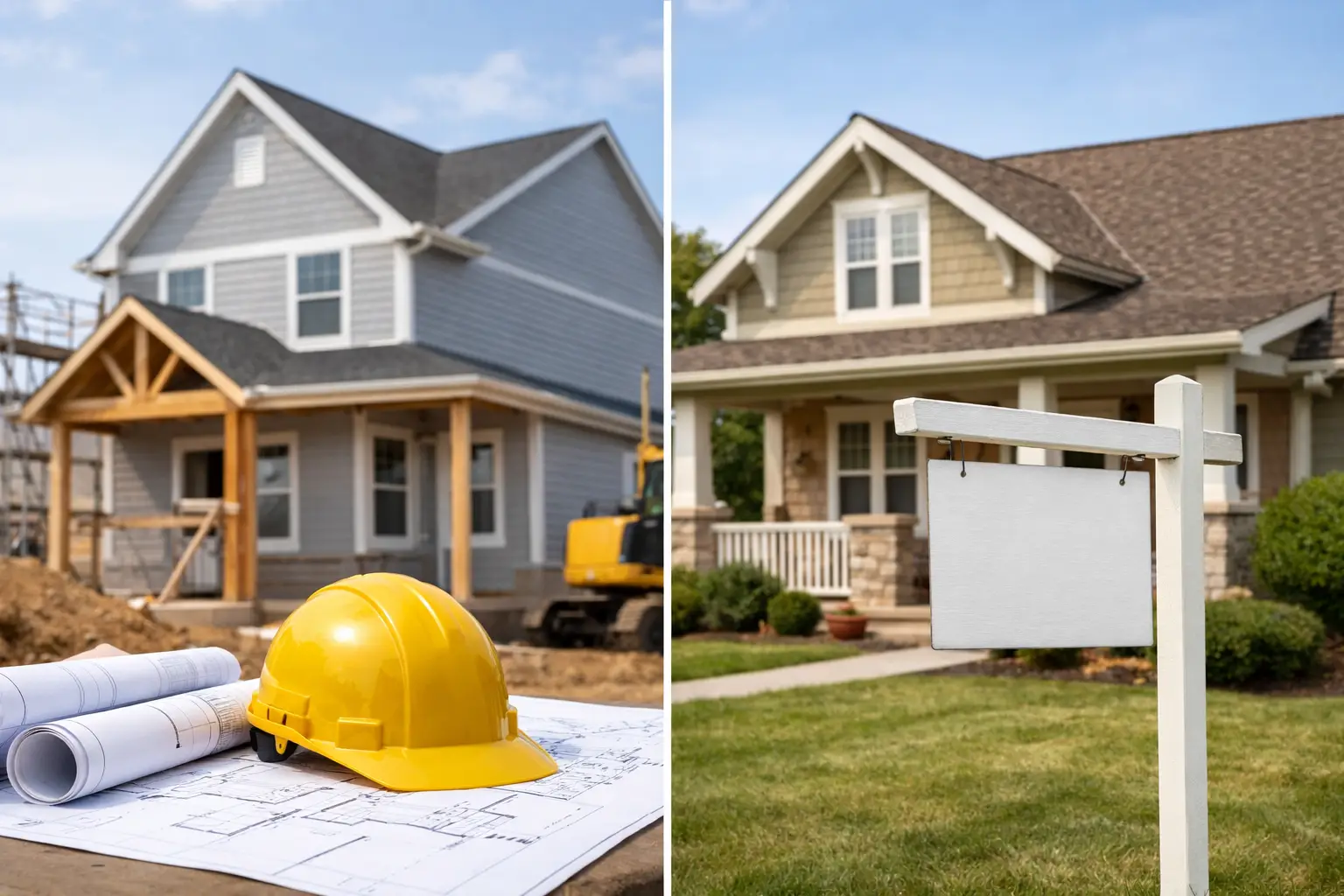
If you are weighing new construction vs resale, you are probably already noticing that the choice is not just about floor plans or fresh paint. It affects your budget, your timeline, your maintenance costs, your neighborhood options, and even how flexible you can be during negotiations. For buyers across Hampton Roads and the Virginia Peninsula, the right answer usually comes down to how you want to live, how soon you need to move, and what kind of trade-offs feel worth it.
A brand-new home can be appealing for obvious reasons. Everything is unused, design choices may feel current, and major systems such as the roof, HVAC, plumbing, and electrical are likely to come with fewer near-term surprises. A resale home, on the other hand, often offers established neighborhoods, mature trees, more central locations, and a clearer picture of what the surrounding area actually feels like day to day.
Neither option is automatically better. The smarter question is which one fits your goals better.
New construction vs resale: what really changes?
The biggest difference is not simply age. It is the full package that comes with the home.
With new construction, you may get modern layouts, open kitchens, larger primary suites, energy-efficient features, and the chance to personalize finishes. You may also deal with builder contracts, phased neighborhoods, added upgrade costs, and longer move-in timelines. Some communities are still growing, which can mean construction traffic, unfinished amenities, or less mature landscaping for a while.
With a resale home, what you see is usually what you get. You can walk through the exact property, evaluate the lot, study the street, and often close faster. But depending on the home’s age and condition, you may need to budget for updates, repairs, or replacing older systems sooner than you would in a newly built property.
That is why this choice tends to be less about preference in the abstract and more about practical priorities.
Price is only part of the cost
Many buyers start by comparing sticker prices, but that only tells part of the story.
A new construction home may look competitive at first, then climb quickly once lot premiums, structural options, appliance packages, upgraded cabinets, flooring, or lighting are added. Buyers are sometimes surprised by how much the model home differs from the base price. The polished look that drew you in may reflect thousands of dollars in extras.
A resale home may have a lower or similar purchase price, but the real question is what you will need to spend after closing. If the home needs new windows, cosmetic updates, or a roof in the next few years, that affects affordability too. The upside is that resale buyers can often choose which projects matter now and which can wait.
Property taxes, HOA fees, utility costs, and insurance can vary on both sides. In Coastal Virginia, flood risk and insurance considerations can also shape the true monthly cost, especially depending on the neighborhood and elevation. That is one reason local guidance matters so much. Two homes with similar list prices can lead to very different monthly budgets.
Lifestyle fit matters more than people expect
This is where new construction vs resale gets personal.
If you want a home that feels move-in ready with minimal immediate maintenance, new construction can be a strong fit. Buyers with demanding jobs, young families, or military timelines often appreciate having fewer projects to tackle right away. There is peace of mind in knowing your systems are new and your layout reflects how many people live today.
If you care most about charm, lot size, mature landscaping, school zone patterns, or being near established shopping and waterfront areas, a resale home may offer more options. In many established communities, the neighborhood character is already there. You are not guessing what the street will look like once development is complete.
Some buyers are also drawn to resale because the homes can feel less uniform. You may find more architectural variety, larger lots, or details that are harder to replicate in newer communities.
Timing can make the decision for you
One of the biggest practical differences is move-in timing.
A resale purchase can often close relatively quickly, assuming financing, inspections, and title work stay on track. If you need to relocate for work, move before a new school year, or line up a sale and purchase on a tighter schedule, that speed can be a major advantage.
New construction timelines are less predictable. Even when a builder gives an estimated completion date, weather, labor availability, permitting, supply chain issues, and inspection scheduling can affect delivery. A quick move-in or spec home can reduce that uncertainty, but if you are building from the ground up, flexibility helps.
That does not mean new construction is too risky. It just means buyers should plan with a buffer rather than assuming an exact date months in advance.
Negotiation looks different on each side
Buyers sometimes assume a new home means less room to negotiate, but the reality depends on the market and the builder.
With resale, negotiation often centers on price, closing costs, repair requests, settlement dates, and contingencies. You are working with an individual seller whose priorities may include speed, convenience, or a specific net amount.
With new construction, the builder may be less likely to lower the base price, especially in a strong market, but they may offer incentives through closing cost assistance, rate buy-down programs, design credits, or premium lot adjustments. Builder contracts also differ from standard resale contracts, and those details matter. The contract, warranty terms, deposit structure, and deadlines should all be reviewed carefully.
This is one reason buyers benefit from having their own representation even when visiting a builder community. The sales agent at the model home works for the builder. A buyer’s agent helps you evaluate the full picture from your side.
Inspections still matter with new homes
Some buyers assume a brand-new house does not need an inspection. That is a mistake.
A new home can still have incomplete work, installation issues, drainage concerns, grading problems, or items that need correction before closing. Municipal inspections and builder quality control are important, but they are not the same as having an independent professional inspect the property for your benefit.
With resale homes, inspections help you understand the condition of what you are buying and prepare for future maintenance. With new construction, inspections help confirm that the home was built as expected and that issues are addressed before they become your problem.
Neighborhood reality is easier to read in resale areas
One of the quieter advantages of resale is visibility. You can often tell how parking works, how traffic flows, how homes are maintained, and what the neighborhood feels like on a weekday evening or a Saturday morning.
In a new construction community, you may be buying into a vision that is still unfolding. The final entrance, amenities, landscaping, or nearby commercial development may not be complete yet. That future can be exciting, but it requires a little imagination and trust in the plan.
For some buyers, that is perfectly fine. For others, especially those relocating from outside the area, it feels more comfortable to buy where the day-to-day environment is already established.
So which is better in Hampton Roads?
There is no one-size-fits-all answer, especially in a region as varied as ours.
If you want lower maintenance, updated features, and a home that is built around current lifestyles, new construction may be the better fit. If you want location flexibility, established surroundings, and the ability to evaluate the exact home and neighborhood in real time, resale may be the stronger choice.
A lot also depends on your financing, your tolerance for projects, and how long you plan to stay in the home. A buyer planning to stay for many years may be more comfortable taking on updates in a resale property. A buyer who wants predictability and fewer near-term repairs may lean toward new construction.
At Horak Realty Group, this is the kind of decision we encourage buyers to slow down and think through carefully. Not because it has to be complicated, but because the best choice is usually the one that fits your life, not just the photos.
How to decide between new construction vs resale
Start with your non-negotiables. Do you need to move by a certain date? Do you want a yard with mature trees? Do you need to cap post-closing expenses? Are you comfortable waiting for completion or handling a few home projects? Once those answers are clear, the path usually gets easier.
Then look at the full monthly payment, not just the list price. Compare taxes, insurance, HOA fees, expected maintenance, and any builder incentives or upgrade costs. A home that looks cheaper upfront is not always the better long-term fit.
Finally, walk through both options with an open mind. Many buyers begin convinced they want one type of home and end up choosing the other once they see how the numbers, timing, and neighborhood feel come together.
The best home is not the newest one or the one with the most character. It is the one that supports your next chapter without stretching your budget, your timeline, or your peace of mind too far.

Ashley Horak
Owner | Realtor ® | Coach | Horak Realty Group | REMAX Elevate
or another way