
Categories
BuyingPublished April 16, 2026
What Credit Score Do I Need to Buy a House?

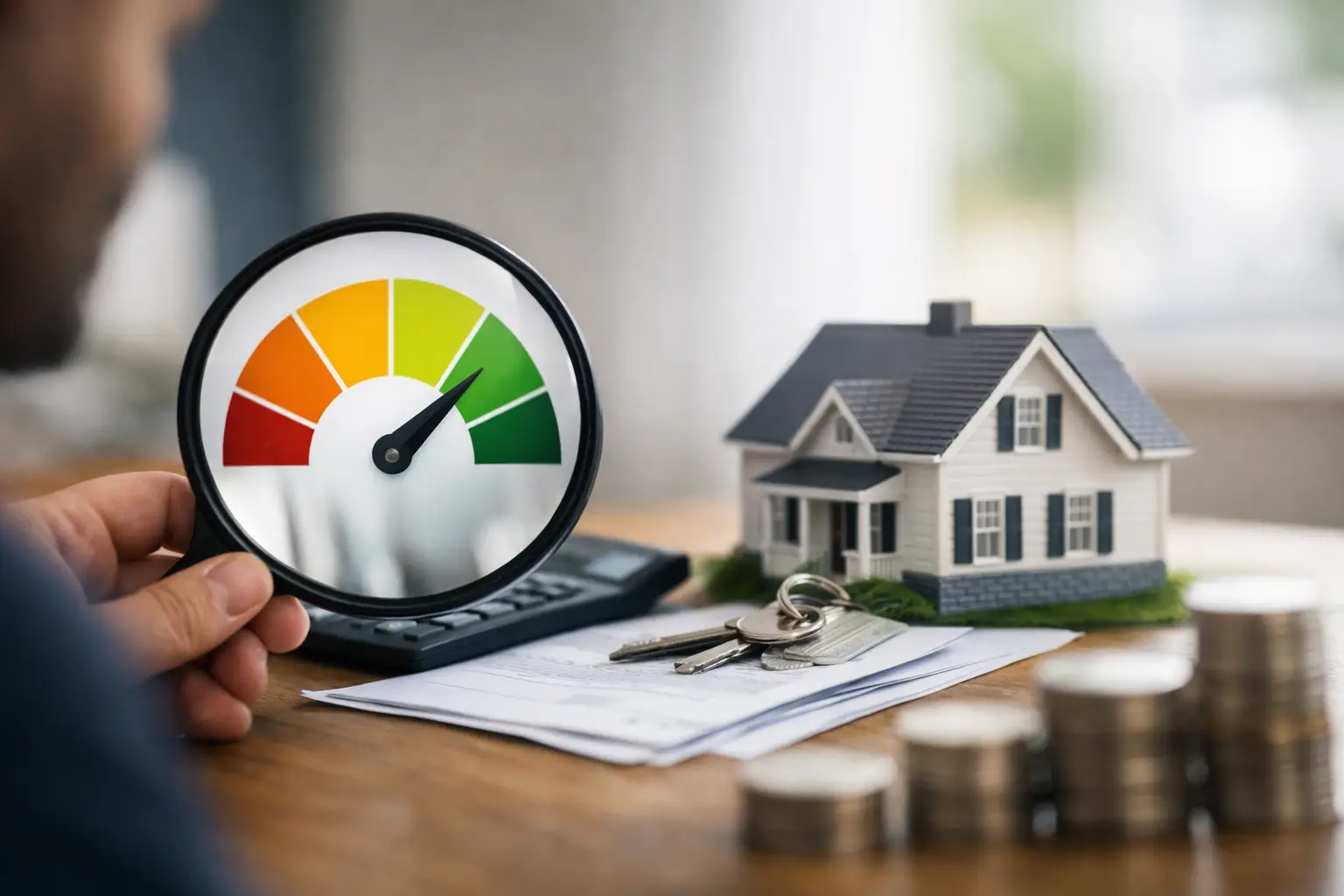
If you're asking what credit score do I need to buy a house, you're probably closer to the process than you think. Most buyers are not starting from a perfect financial picture. They're starting from real life - student loans, car payments, a few missed payments years ago, or simply not knowing where they stand yet.
The good news is that buying a home is not reserved for people with an 800 credit score. Many buyers qualify with scores that are solid, not flawless. What matters most is understanding how lenders look at your full financial profile and knowing where a stronger score can improve your options.
What credit score do I need to buy a house?
The short answer is that it depends on the loan program and the lender. In many cases, buyers can qualify for a mortgage with a credit score as low as 580 through certain loan types. Some loans may allow lower scores, but that usually comes with stricter requirements, larger down payments, or fewer lender options.
For conventional loans, many lenders like to see at least a 620. For FHA loans, 580 is a common benchmark if you want access to a lower down payment option. VA loans and USDA loans do not always have a hard minimum set by the government, but lenders often apply their own score standards, which can land somewhere around 580 to 620 or higher.
That said, a minimum score is not the same as a comfortable score. Just because a loan program allows a certain number does not mean you'll get the same interest rate, monthly payment, or approval experience as someone with a higher score.
Why your credit score matters beyond approval
A lot of buyers focus on one question: can I get approved? That matters, of course, but your credit score affects more than a yes or no.
A stronger score can help you qualify for better interest rates, which directly affects your monthly payment and the total cost of the home over time. Even a difference of a fraction of a percentage point can change your budget in a meaningful way. It may also affect how much cash you need up front, what type of mortgage insurance applies, and which loan products make sense for you.
This is why we often tell buyers not to treat credit as a pass-fail issue. There is a big difference between barely qualifying and being in a position to buy confidently.
Common credit score ranges and what they usually mean
If your score is 760 or above, you're generally in a strong position. You'll likely have access to more competitive rates and more lender flexibility, assuming the rest of your finances are in good shape.
If your score falls between 700 and 759, you're still in a very solid range for many mortgage options. Most buyers here can move forward with good terms, though exact pricing will still depend on debt, down payment, and income.
If you're between 620 and 699, you may still qualify for a conventional loan and several other programs, but the terms may be less favorable than they would be with a higher score. This is a range where a little preparation can go a long way.
If your score is between 580 and 619, homeownership may still be possible, especially with FHA financing or certain lender programs. This range often requires more careful planning, and buyers may need to be realistic about rate, monthly payment, and repair expectations.
If you're below 580, it does not necessarily mean you're out of the running forever. It usually means this is a prep stage rather than a shopping stage. A focused plan over the next few months may make a major difference.
Lenders look at more than just your score
One of the biggest misconceptions in real estate is that your credit score alone determines whether you can buy a house. It doesn't.
Lenders also review your debt-to-income ratio, employment history, income stability, cash reserves, down payment funds, and recent credit behavior. Someone with a 640 score and strong income, low debt, and steady savings may be in a better position than someone with a 700 score who is stretched thin every month.
They also pay attention to the story behind the numbers. Was there a one-time hardship followed by steady recovery? Are there recent late payments? Have you opened several new credit accounts in a short period? Those details matter.
For buyers in Hampton Roads and the Virginia Peninsula, this full-picture review can be especially helpful. We work with many first-time buyers, military families, and relocating households whose finances do not fit into a perfectly simple box. A good lender knows how to evaluate the whole borrower, not just one score.
What credit score do I need to buy a house with different loan types?
Conventional loans are often a fit for buyers with stronger credit, especially if they want competitive pricing and flexible property options. A 620 score is a common starting point, but higher scores usually bring better terms.
FHA loans are popular with first-time buyers because they can be more forgiving on credit and down payment. A 580 score is often the threshold for a lower down payment option, though lender overlays can still apply.
VA loans can be an excellent path for eligible service members, veterans, and some surviving spouses. The VA itself does not set a universal minimum credit score, but lenders typically do. Many VA buyers benefit from flexible underwriting, especially when the rest of the file is strong.
USDA loans can help eligible buyers in certain areas purchase with little or no down payment. Like VA loans, these often come with lender-specific credit expectations.
This is where local guidance matters. Not every lender approaches these programs the same way, and not every buyer should choose the same loan just because they technically qualify for it.
If your score is lower than you hoped, here is what to work on first
If your credit score is close but not quite where it needs to be, the fix is not always complicated. Often, the fastest gains come from reducing credit card balances, making every payment on time, and avoiding new debt while you're preparing to buy.
It's also worth checking your credit reports for errors. Incorrect late payments, outdated balances, or accounts that do not belong to you can drag your score down unfairly. Cleaning those up can help more than people expect.
Try not to close old accounts without advice, and do not make big financial moves right before applying for a mortgage. Financing a car, opening new cards, or moving large amounts of money between accounts can create questions during underwriting.
If you're serious about buying within the next six to twelve months, talk with a lender before you start guessing. A quick review can tell you whether you should move now, wait a little, or follow a specific credit improvement plan.
The right time to talk with an agent
Many buyers think they need to have everything perfectly lined up before they reach out to a real estate team. That usually creates more stress, not less.
The best time to connect is early, even if you're still figuring out financing. A good agent can help you understand what price range fits your goals, what neighborhoods align with your budget, and how timing may affect your options. In markets across Yorktown, Williamsburg, Newport News, Hampton, and surrounding areas, that planning can save you from chasing homes that do not make sense for your finances.
At Horak Realty Group, we believe buyers deserve honest guidance from the start. Sometimes that means helping you move quickly. Sometimes it means helping you build a plan first so that when the right home comes along, you're ready.
A better question than the minimum score
Instead of asking only what credit score do I need to buy a house, ask this too: what score puts me in the best position for the payment and loan terms I can comfortably live with?
That shift matters. Buying a home is not just about getting through underwriting. It's about stepping into homeownership with clarity, confidence, and a monthly payment that still lets you enjoy your life after closing.
If your score is strong, great - you may be ready to start shopping. If it needs work, that does not mean you have to put your plans on hold forever. It just means your next best step is preparation, and that step can start sooner than you think.

Ashley Horak
Owner | Realtor ® | Coach | Horak Realty Group | Mission Realty Group LLC
or another way