
Categories
BuyingPublished July 13, 2026
Yorktown Neighborhoods: Where to Start

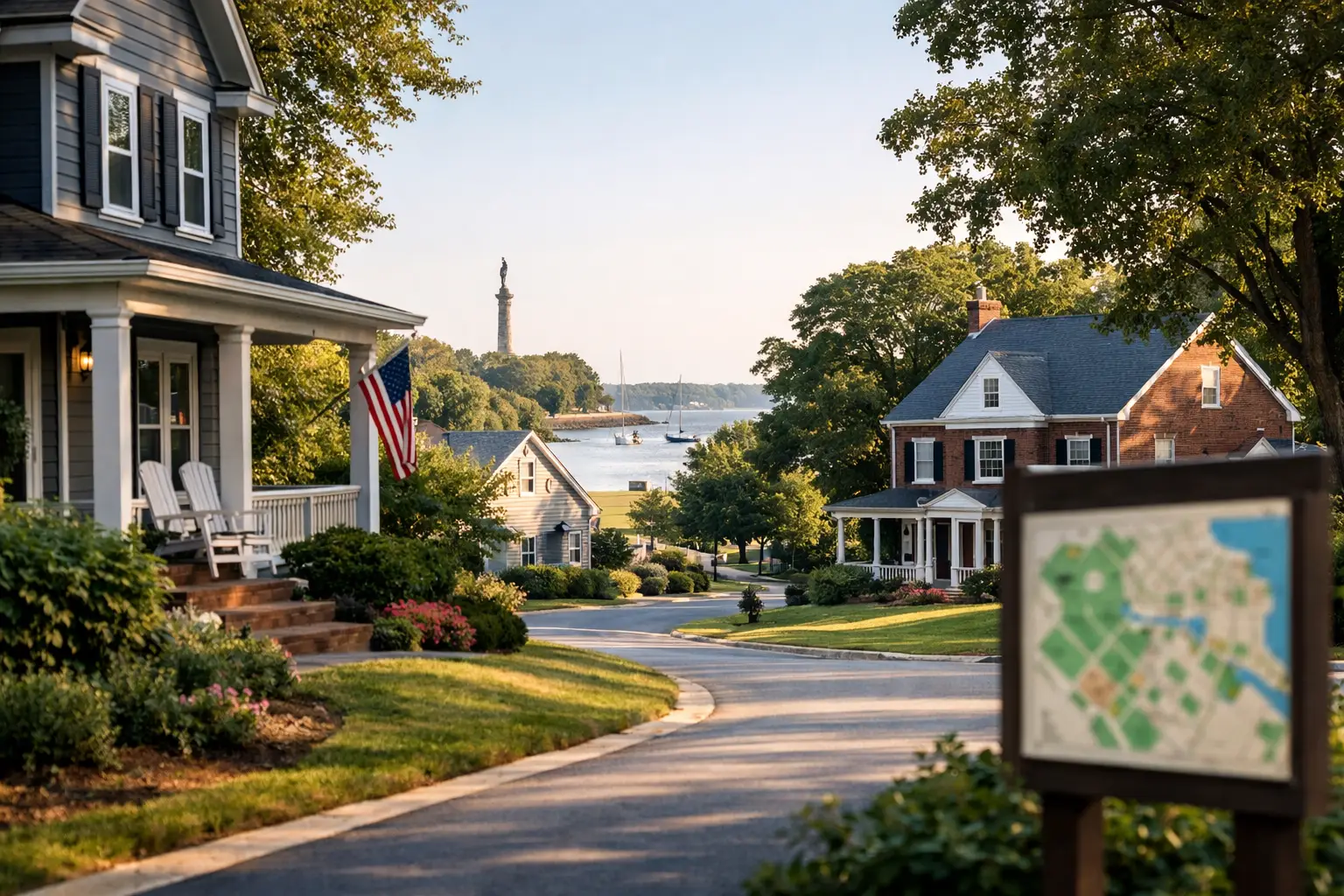
If you're thinking about a move to Yorktown, neighborhoods matter as much as the house itself. Two homes with similar square footage can offer completely different daily routines depending on whether you're closer to the waterfront, tucked into an established subdivision, or looking for more land and a quieter pace.
That is why a smart home search in Yorktown starts with lifestyle before it starts with listings. Commute time, school preferences, lot size, neighborhood feel, access to shopping, and even how much road traffic you want to deal with all shape which area will feel right long after closing day.
How to think about Yorktown neighborhoods
One of the biggest mistakes buyers make is treating Yorktown like one uniform market. It is not. Yorktown has pockets that feel historic and walkable, areas with classic suburban neighborhoods, and sections where homes sit on larger lots with a little more breathing room.
For some buyers, being close to the Yorktown waterfront is the priority. For others, the better fit is a neighborhood with sidewalks, newer construction, and easy access to major routes for commuting into Newport News, Hampton, or other parts of the Peninsula. Families may focus on school zones and recreation options, while military-connected buyers often weigh convenience and flexibility if another move could happen down the road.
The right question is not just, "What is the best neighborhood in Yorktown?" It is, "What kind of daily life do I want, and what trade-offs am I comfortable making?"
Yorktown neighborhoods by lifestyle
For buyers who want history and waterfront access
Some of the most recognizable parts of Yorktown are the areas near the waterfront and historic district. These locations appeal to buyers who value charm, scenery, and a stronger sense of place. You may be closer to local events, water views, and the kind of setting that feels distinctly different from a standard subdivision.
The trade-off is that inventory can be limited, lot sizes and home styles vary, and pricing may reflect location more than square footage alone. A buyer looking for a newer floor plan, a large primary suite, or a three-car garage may need to adjust expectations if waterfront proximity is the top goal.
For buyers who want established suburban neighborhoods
A large share of Yorktown's appeal comes from established residential communities with mature trees, traditional home styles, and a neighborhood feel that many buyers already picture when they think about settling down. These areas often attract families and move-up buyers who want more space without feeling too far removed from schools, parks, and daily conveniences.
These neighborhoods can offer a strong middle ground. You may find better lot sizes than in newer developments and more predictable community character than in scattered rural-style areas. At the same time, some homes may need cosmetic updates, and buyers should be realistic about age-related maintenance on roofs, windows, HVAC systems, and plumbing.
For buyers who want newer homes and lower-maintenance living
Some Yorktown-area communities appeal to buyers who prefer more current layouts, open-concept living, and less immediate renovation work. That can be especially attractive for first-time buyers, busy professionals, or households relocating on a tighter timeline.
Newer or newer-feeling communities often come with trade-offs of their own. Lots may be smaller, HOA expectations may be more structured, and the neighborhood may not have the same mature landscaping or custom feel as older sections of Yorktown. For many buyers, that is a worthwhile exchange for move-in-ready condition and more modern design.
For buyers who want land, privacy, or a quieter setting
Not every Yorktown buyer wants a classic neighborhood setup. Some are looking for more acreage, fewer homes close together, room for hobbies, or simply a quieter setting. In and around York County, there are opportunities for that kind of lifestyle, but they usually require flexibility.
You may be farther from shops or restaurants, and your commute could be longer. Internet options, septic systems, and private well considerations can also come into play depending on the property. Still, for the right buyer, the added privacy and space are worth it.
What buyers should compare before choosing a neighborhood
Price is part of the conversation, but it should not be the only filter. In Yorktown, two neighborhoods in a similar budget range can deliver very different value depending on what matters most to you.
Start with your non-negotiables. If school zoning is central to your search, that needs to be clarified early. If your commute takes you toward Newport News Shipbuilding, Langley, or I-64 access points, driving the route at realistic times matters more than a map suggests. If you want walkability, make sure it is true walkability for your routine, not just a feature that sounds good online.
You should also compare resale strength. Even if this feels like a long-term home, life changes. Some neighborhoods hold buyer demand more consistently because of location, lot size, school appeal, or overall condition of nearby homes. Others may offer more house for the money today but can be less predictable when it is time to sell.
What sellers should know about Yorktown neighborhoods
If you already own a home in Yorktown, your neighborhood shapes how your property should be priced and marketed. A home in an established community with strong buyer demand should not be positioned the same way as a more rural property or a house in a niche location near the water.
Buyers do not just shop for bedrooms and bathrooms. They shop for convenience, school access, lot size, privacy, community feel, and future resale confidence. That means your home's value story is tied to the neighborhood around it, not just the features inside the front door.
This is where hyper-local positioning matters. In one Yorktown neighborhood, buyers may pay a premium for updates and turnkey condition. In another, they may care more about lot size, detached garage space, or access to certain routes. Good pricing is not about finding a broad average. It is about understanding what your likely buyer will compare your home against.
A few Yorktown trade-offs to keep in mind
Yorktown has broad appeal, but no area is perfect for every household. Buyers who want a highly walkable setting may have fewer options than in denser urban markets. Buyers chasing both acreage and a short commute may need to stretch on budget or compromise on home age. Those who want top-tier updates in a prime location may face tighter competition when inventory is low.
That is normal. Real estate decisions are usually about matching priorities, not checking every box.
The most successful buyers tend to be the ones who know where they can flex. Maybe you give up a little square footage to get the location you want. Maybe you choose an older home in a stronger neighborhood and plan updates over time. Maybe you move slightly outside your first-choice pocket to get more yard, more privacy, or a better monthly payment.
How to narrow your search with confidence
If you're trying to sort through Yorktown neighborhoods, it helps to think in layers. First, identify your must-haves: budget, commute, bedrooms, and any school or property requirements. Next, identify your quality-of-life priorities: lot size, neighborhood feel, age of home, and how close you want to be to shopping, water access, or major roads.
Then spend time in the areas that make your shortlist. Drive them during the morning and evening. Notice traffic patterns, upkeep, noise levels, and how the homes sit on their lots. The details that seem small during an online search are often the ones that shape how a place feels once you live there.
For many buyers and sellers, that local context is where having a relationship-driven real estate team makes the biggest difference. Horak Realty Group helps clients look beyond the listing details and evaluate how a neighborhood fits their goals now and later.
Yorktown has a lot to offer, but the best move is rarely about choosing the most popular area. It is about choosing the neighborhood that fits the way you actually want to live.
|


or another way